

Equity Theory
John Stacey Adams
Introduction
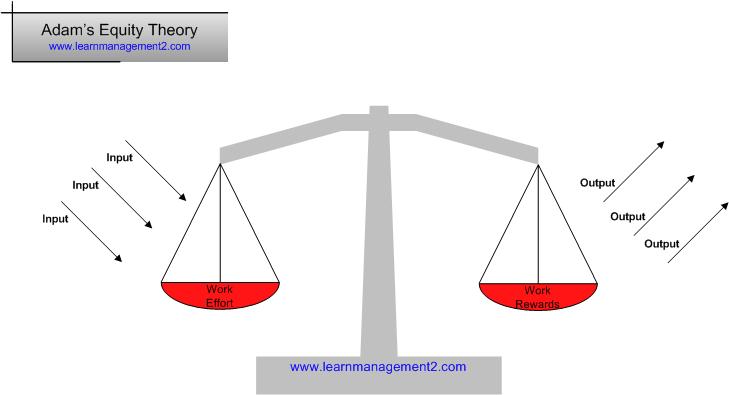
John Stacey Adams proposed that an employee's motivation is affected by whether the employee believes that their employment benefits are at least equal to the amount of the effort that they put into their work. Adams' categorised employment benefits and rewards as outputs and an employee's work effort as inputs.
The Diagram below illustrates the components making up Adams' Equity Theory and why they need to be balanced against each other
Input (Employee's Work Contributions) Examples
The list below provides examples of things that could be categorised as examples of things that are work inputs.
- The number of hours worked by employees
- An employee's work responsibilities
- An employee's work duties
- The work commitment demonstrated by the employee
- An employee's loyalty
- An employee's flexibility such as undertaking tasks at short notice
- The support that the employee has provided to the organisation, colleagues and line managers
This list is not exhaustive and also includes things in addition to the work an employee physically does. The list includes an employee's behaviours and attitudes such as loyalty and flexibility. These things are categorised as inputs because they will help the employer to complete their activities but may need the employee to sacrifice something in order to be flexible and loyal.