The cost of quality is the total costs involved in preventing product failures and the costs associated with rectifying product or service failures. The costs could be tangible costs associated with fixing the problem or intangible costs such as the failure affecting the firm's good reputation and consequential trading losses. There are three main costs to quality and these will be explained briefly below
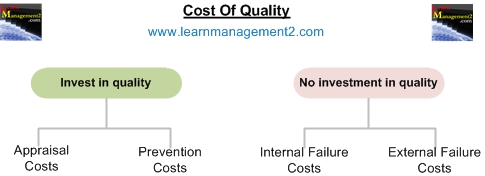
The diagram above shows the types of costs incurred by investing in quality and the costs incurred by failing to invest in quality
Prevention Costs
There is a famous saying, prevention is better than cure. In business this is true. Prevention costs are the costs of building quality into the production process. This could involve having regular team meeting to make sure production is on track, or within a service firm, making sure that staff are all trained to certain standards before they engage with the public. Prevention costs could involve the checks during the production process or checks on supplier's products. For example supermarkets require their food suppliers to pass regular independent quality checks by external companies.
Appraisal Costs
Once a product or service has been produced it needs to be evaluated to make sure it reaches some form of quality standard. Appraisal costs refer to all the costs associated with making sure that the product conforms to certain specifications. This includes the costs of internal inspection, supplier evaluation i.e. making sure your supplier has good quality procedures and product testing.
Failure Costs
Lack of investment in quality and quality checks can often lead to product failure. There are two types of failure cost:
Internal Failure Costs - If the problem is identified before the product/service is sold to the consumer then the problem can be rectified. This could involve reworking the product or scrapping the product. Obviously this will have cost implication on the organisation e.g. Labour costs, material costs and any impact on production targets.
External Failure Costs - If the problem is identified after the product reaches the customer this will cost the firm. External failure costs include the cost of replacing faulty products, cost of recalling the products, the cost of fixing the problem, legal costs if the product has caused injuries/fatalities and the cost of product failure on the firm's reputation.
Conclusion
So as we can see quality has to be managed very well and does not come for free! Next time you buy a product or service think about all the effort that goes into the quality process and watch out for the "fall out" when a successful company receives negative publicity from a big product failure.
We hope you've enjoyed learning about the cost of quality, here are some more learnmanagement2.com articles about quality to help you continue learning about quality