

Leadership Power
Introduction
An essential part of leadership is to influence the people you lead so that they'll follow your instructions. For the purposes of this article we will refer to the people that the leader is leading as followers. The influence of a leader will depend on a variety of factors including their personality and the personality of their followers.The influence of a leader over his followers is often referred to as power. There are different types of Leadership Power.
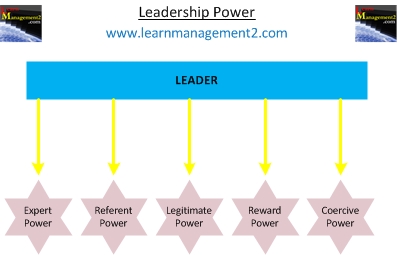
Reward Power
This type of influence is created when the leader is able to offer a reward to his followers for completing tasks in a certain manner. Rewards in the workplace can take a variety of forms from chocolates, gift vouchers and holidays to promotions, commission and pay rises. This reward will only be effective if ;
- Firstly - the reward appeals to the followers. For example there is no point offering chocolate as a reward to somebody that likes crisps. This is because they will not view chocolate as a reward, so there is no incentive to complete the task.
- Secondly – the followers have to believe that the leader will give them the reward promised once the task is completed by them.
- Thirdly the reward should be proportionate to the task the follower has to complete. For example it would be disproportionate to reward an employee with a promotion for making a cup of tea. Similarly a follower would feel undervalued, if rewarded with a £5 gift voucher after they spent six months doing their manager's job without a pay rise.
This type of power needs to be used carefully to prevent followers becoming accustomed to rewards and refusing to complete routine tasks without a reward. Generally rewards should not be offered to followers/employees to complete duties which are a normal part of their role. This is because as an employee they are under a contractual obligation to complete these tasks and they are already rewarded for this through their salary. The other reason why rewards should be offered carefully, is that frequent use can reduce the impact or influence that offering a reward initially had on the follower. Followers will soon tire of the reward especially if the reward is small for example chocolates or flowers.
Coercive Power
This is the opposite of reward power because this power is based on the leader having control over what happens if followers do not act as required. If followers do not undertake the action required, the leader will impose a penalty. Penalties take a variety of forms including withdrawal of privileges, job losses, verbal abuse, and with drawl of job promotion opportunities. In all cases the leader will need to choose the penalty carefully to prevent breaking the law or being the subject of an employment tribunal. Coercive power requires followers to believe that the leader has the ability to impose the stated penalty. Also the penalty has to be something that the followers do not want to have imposed on them. For example a penalty results in coffee being banned is unlikely to influence a tea drinker. Finally (just as the reward in reward power should be proportional to the action taken by the follower), the penalty should be proportionate to the action not completed by the follower. For example it would be disproportionate to fire an employee follower the first time they do not return from their lunch break at the stated time. Similarly it is disproportionate to reduce the wages of an employee follower that hasn't completed their duties over a six month period by £20 when their monthly pay is £1000. Coercive powers should be used carefully; overuse can lead to unhappy employee followers. Unhappy followers can be negative or unmotivated, they may resign or adopt a “work to rule” attitude. Work to rule is where employees refuse to undertake any duties (or adopt working practices) that are not stated in their contract.