

Management Systems
Renesis Likert
Introduction
Dr Renesis Likert has studied human behaviour within many organisations. After extensive research, Dr. Renesis Likert concluded that there are four systems of management. According to Likert, the efficiency of an organisation
or its departments is influenced by their system of management. Likert categorised his four management systems as follows;
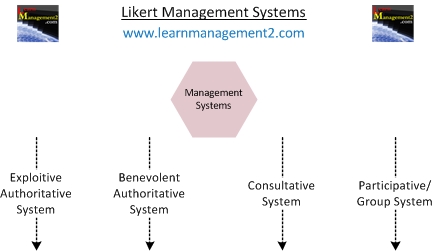
The diagram below shows Likert's Four Management Systems, exploitive Authoritative System, Benevolent Authoritative System, Consultative System and Participative or Group System.
Exploitive Authoritative System (1)
In this type of management system the job of employees/subordinates is to abide by the decisions made by managers and those with a higher status than them in the organisation. The subordinates do not participate in the decision making. The organisation is concerned simply about completing the work. The organisation will use fear and threats to make sure employees complete the work set. There is no teamwork involved.
Benevolent Authoritative System (2)
Just as in an exploitive authoritative system, decisions are made by those at the top of the organisation and management. However employees are motivated through rewards (for their contribution) rather than fear and threats. Information may flow from subordinates to managers but it is restricted to "what management want to hear".