

Centralised And Decentralised Organisations
Introduction
In a centralised organisation head office (or a few senior managers) will retain the major responsibilities and powers. Conversely decentralised organisations will spread responsibility for specific decisions across various outlets and lower level managers, including branches or units located away from head office/head quarters. An example of a decentralised structure is Tesco the supermarket chain. Each store of Tesco has a store manager who can make certain decisions concerning their store. The store manager is responsible to a regional manager.
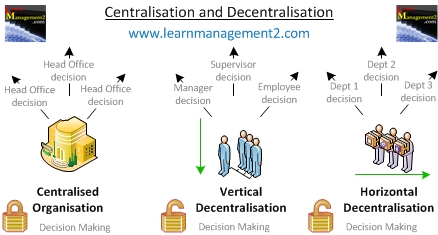
The diagram below shows three different ways that organisations make decisions; centralised organisation, vertical decentralisation and horizontal decentralisation
Organisations with a combined Centralised and Decentralised Structure
Organisations may decide that a combination of centralisation and decentralisation is more effective for them. For example functions such as accounting and purchasing may be centralised to save costs. Whilst tasks such as recruitment may be decentralised as units away from head office may have staffing needs specific to them.
Vertical Decentralisation
Certain organisations implement vertical decentralisation which means that they have handed the power to make certain decisions, down the hierarchy of their organisation. Vertical decentralisation increases the input, people at the bottom of the organisation chart have in decision making.
Horizontal Decentralisation
Horizontal decentralisation spreads responsibility across the organisation. A good example of this is the implementation of new technology across the whole business. This implementation will be the sole responsibility of technology specialists