

Introduction to Organisational Structures
Introduction
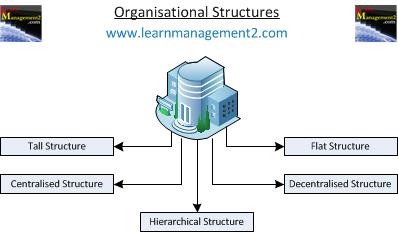
Organisations are structured in a variety of ways, dependant on their objectives and culture. The structure of an organisation will determine the manner in which it operates and it’s performance. Structure allows the responsibilities for different functions and processes to be clearly allocated to different departments and employees.
Organisation Structure and Business Success
The wrong organisation structure will hinder the success of the business. Organisational structures should aim to maximise the efficiency and success of the Organisation. An effective organisational structure will facilitate working relationships between various sections of the organisation. It will retain order and command whilst promoting flexibility and creativity.
Internal Factors
Internal factors such as size, product and skills of the workforce influence the organisational structure. As a business expands the chain of command will lengthen and the spans of control will widen. The higher the level of skill each employee has the more the business will make use of the matrix structure to maximize these skills across the organisation.